From commercial tower cores to tunnel linings, every construction sector demands formwork that meets specific load, geometry, and cycle-time requirements. Doka engineers systems to match.
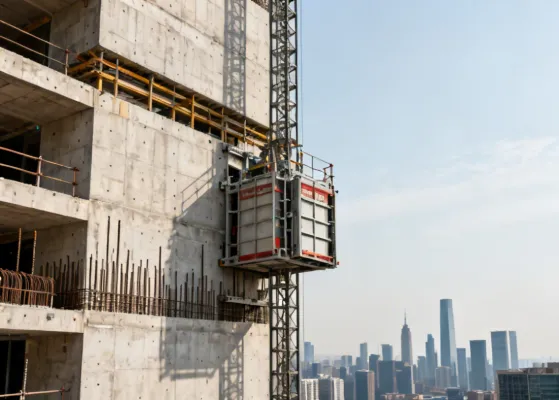
High-rise cores, post-tensioned slabs, and transfer beams demand forming solutions that maintain accuracy across dozens of repetitive cycles. Doka wall and climbing systems are designed to deliver consistent concrete surface quality (Class F3 or better) while holding 3-to-5-day floor-cycle targets on typical office and mixed-use towers.
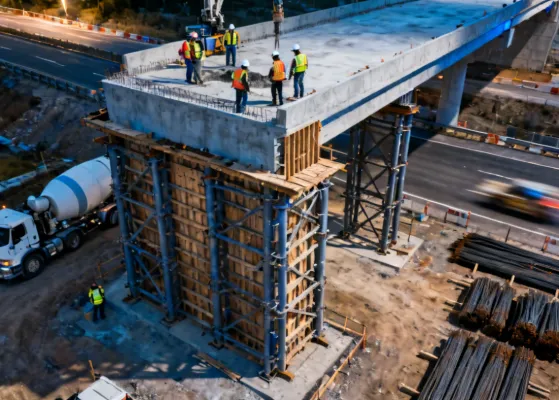
Bridge piers, abutments, box girders, and tunnel linings involve non-standard geometries and heavy structural loads. Doka infrastructure solutions combine modular shoring with custom-fabricated forming elements, reducing the need for bespoke carpentry on site while maintaining the dimensional precision required by infrastructure codes.
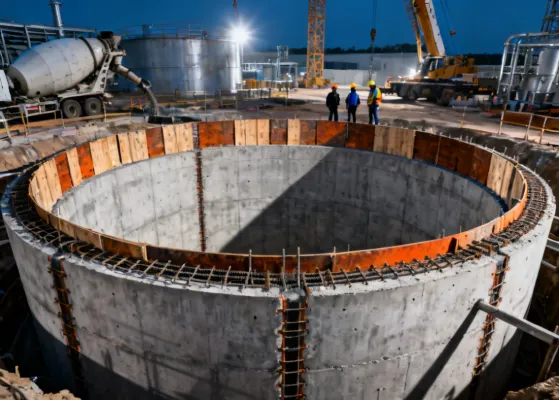
Power plants, water treatment facilities, storage tanks, and processing structures often involve curved walls, deep foundations, and elevated working platforms. Doka provides radius-adjustable formwork and heavy-duty shoring that meets the tolerances and safety factors required by industrial and energy-sector standards.
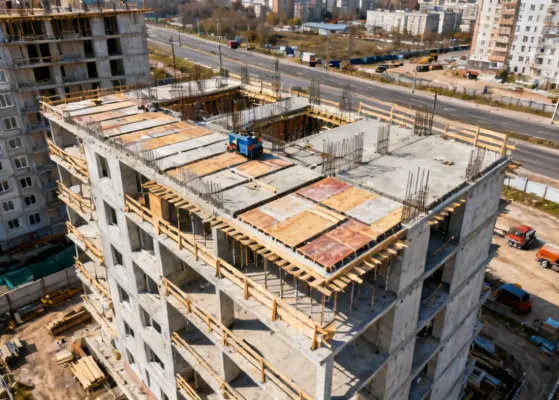
Repetitive floor plans in residential towers and mid-rise complexes are well suited to panelized slab formwork with drop-head systems. Doka residential solutions prioritize fast stripping and re-erection so that small crews can maintain aggressive cycle times across identical floor plates without crane-intensive panel moves.
Selecting the right formwork system depends on project geometry, concrete pressure, cycle frequency, and site access constraints. The table below summarizes key parameters across Doka's main product lines.
| Parameter | Steel Wall Panels | Slab Table Systems | Climbing Platforms | Shoring Towers |
|---|---|---|---|---|
| Max. Concrete Pressure | 80 kN/m² | N/A (gravity load) | 80 kN/m² (wall face) | N/A (vertical load) |
| Load Capacity | Per tie arrangement | Up to 6.0 m clear span | Self-weight + work platform | 70 kN per leg |
| Service Life | 500+ pour cycles | 400+ cycles (steel frame) | 500+ cycles (platform) | 500+ cycles (tower frame) |
| Crane Dependency | Required for gang forms; manual assembly available for single panels (up to 95 kg) | Required for table repositioning | None — hydraulic self-climbing | Recommended for stacking above 10 m |
| Typical Cycle Time | 1–2 days per pour section | 3–5 days per floor | 45 min per vertical lift | Depends on deck geometry |
| Limitations | Heavy individual panels (>200 kg for large sizes) require crane; not economical for pours under 50 m² | Requires minimum 2.7 m clear height for table extraction; not suited for irregular slab edges | Cost-effective only above ~15 floors; requires consistent core geometry | Foundation must support concentrated point loads; lateral bracing needed above 12 m freestanding height |
| Applicable Standards | EN 13670, ACI 301 | EN 13670, AS 3610 | EN 13670, project-specific | EN 12812, BS 5975 |
Values shown are typical maximums under standard conditions. Actual capacity depends on tie spacing, panel configuration, soil conditions, and environmental factors (wind load, seismic zone). All applications require site-specific engineering calculations. Temperature extremes below −20°C or above 40°C may affect concrete curing schedules and formwork cycling assumptions.
Send us your plans or project brief and our formwork engineers will recommend the right system, estimate quantities, and prepare a budgetary proposal.
Contact Us Request a Consultation